
While working from home can be effective for a variety of tasks, the collaborative team breakthroughs typically happen at the office and cannot be replicated in a Zoom call. The COVID-19 pandemic has created an opportunity for many organisations — and an urgent necessity for some — to rethink their office location strategy. As more organisations consider consolidating their office requirements and choosing hubs for their workforce, it is critical for business leaders to inject a holistic approach into location strategy decisions.
80% of Australian companies which permit employees to work remotely expect the trend to continue through the long-term*
As highlighted by the relatively low levels of occupancy of Australia’s CBD office markets, there remains a disconnect between employees and employers. Although occupancy rates are recovering; the latest CBD office occupancy levels suggest that employees remain weary of not necessarily the office environment as such but likely the fear of the journey to CBD workplaces. With corporate workplaces an indispensable tool in the attraction and retention of talent, the appeal of suburban offices being located closer to their employees at 55% of the cost compared to CBD locations is an increasingly attractive proposition to CFOs.
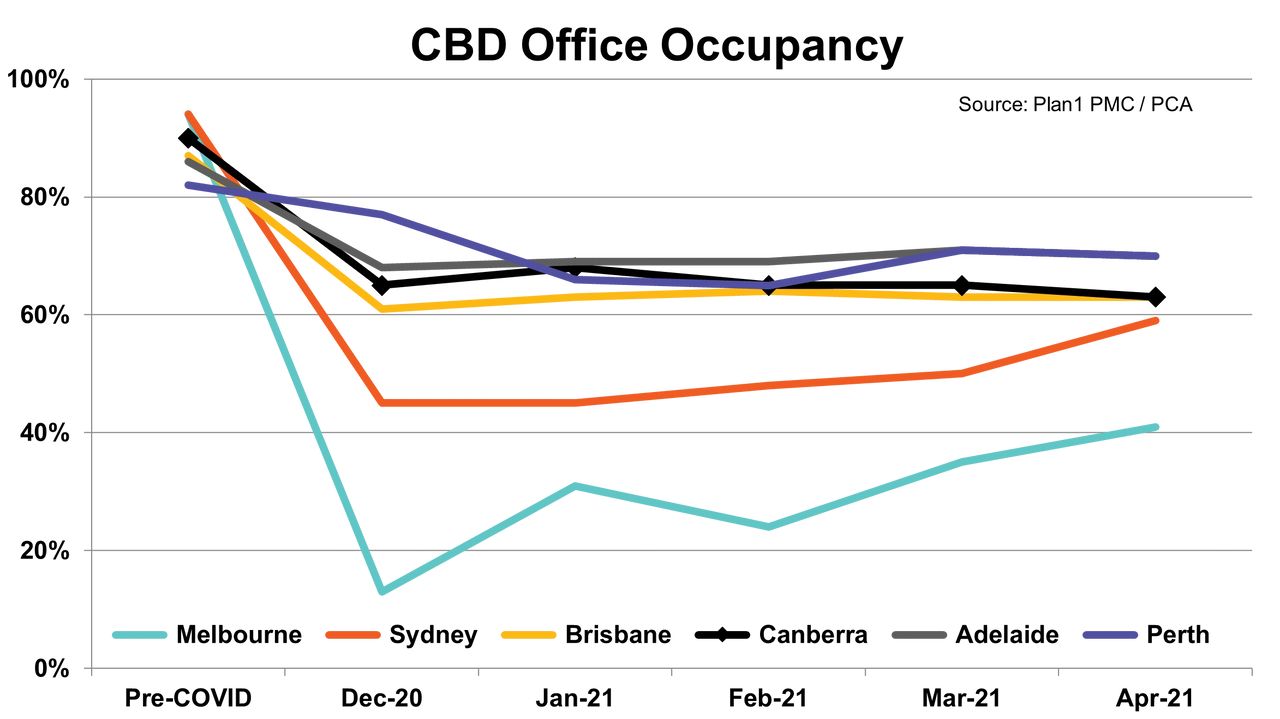
As working remotely becomes more routine, it may become harder to retain employees if employers go back to the old working arrangements. Switching back from a highly flexible environment to crowded offices, set schedules and long commutes may no longer be practical or attractive.
With Australia’s unemployment rate projected to have already peaked as a result of the pandemic and forecast to decline to 4.5% by June 2024 – the lowest since the global financial crisis, businesses will need to prioritise flexibility to meet employees’ expectations in a post-COVID world. To reduce commutes for employees, one option businesses could consider, would be a “hub-and-spoke” model where companies have a centralised “hub” office with dispersed “spoke” offices within the suburbs where employees live.
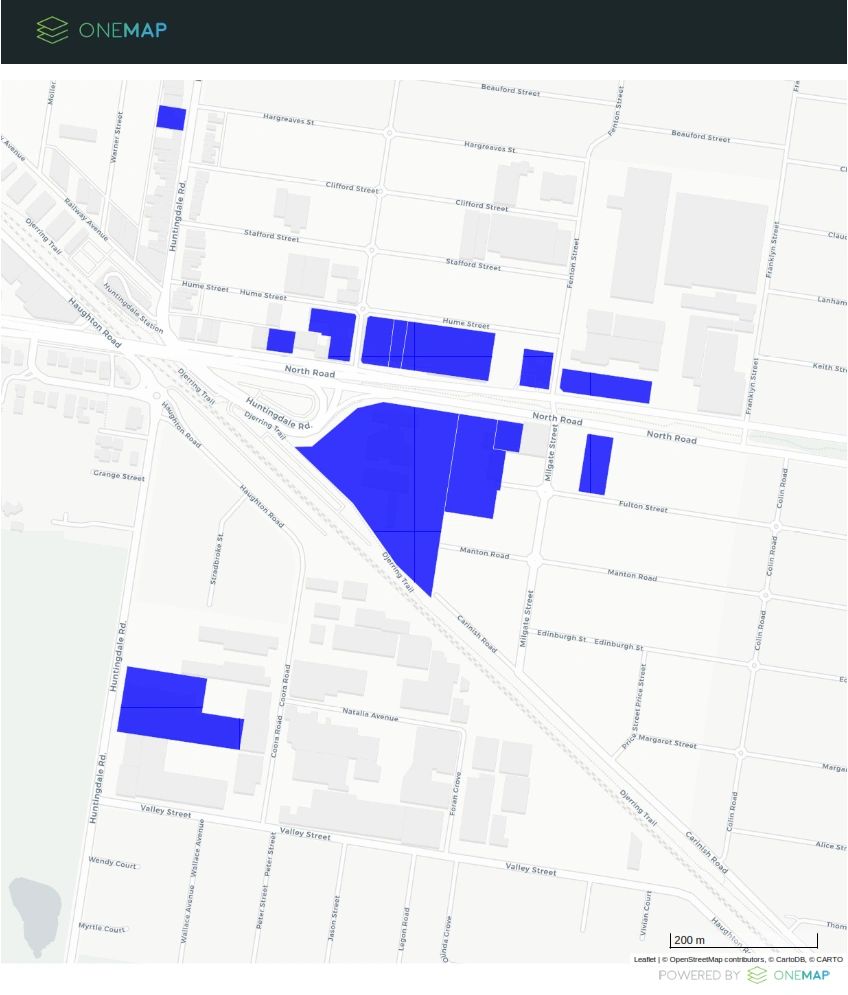
While office stock outside of Australia’s CBD office markets accounts for 41% of Australia’s total office space, with the average age of those assets’ at 20 years old, not all suburban office buildings will meet the demands of occupiers and investors expectations.
In recent years much of the development pipeline for suburban offices has been focused on City Fringe locations, however the nature of the low-rise, less dense suburban office buildings further afield may appease the new workforce priorities of health and wellness.
There is an opportunity for owners to upgrade the services of those assets to meet the heightened health and wellbeing requirements of employees. Combining Plan1’s strategic research capability with OneMap’s site assessment platform helps identify which development sites meet the needs of developers, owners and occupiers for workplaces of the future.
At Plan1 we utilise the OneMap platform to identify suitable sites and locations for developers, investors and occupiers based on their bespoke strategic criteria. The OneMap platform provides a single source of various data layers including planning zonings, property boundaries and distances to public transport, shops and open spaces. With the ability to combine proprietary data detailed site identification and analysis can be undertaken across 4 million properties across Australia.
With all property sectors in a state of flux, the coronavirus pandemic has raised essential questions about the future of work and especially the impact on the office market. In my frequent discussions with investors, developers and occupiers, how offices will be occupied in the future is a hot topic with most employees yet to return full-time.
Having been forced to work from home in the height of the pandemic, the experiences will likely cause a behavioural change that is likely to stick beyond the short-term. While there is no single “one-size-fits-all” solution for occupiers; suburban offices may benefit in the near-term as businesses around the world start to re-think ways to work.
Are you prepared for the workplaces of the future?
* Businesses continue to adapt and modify operations | Australian Bureau of Statistics (abs.gov.au)